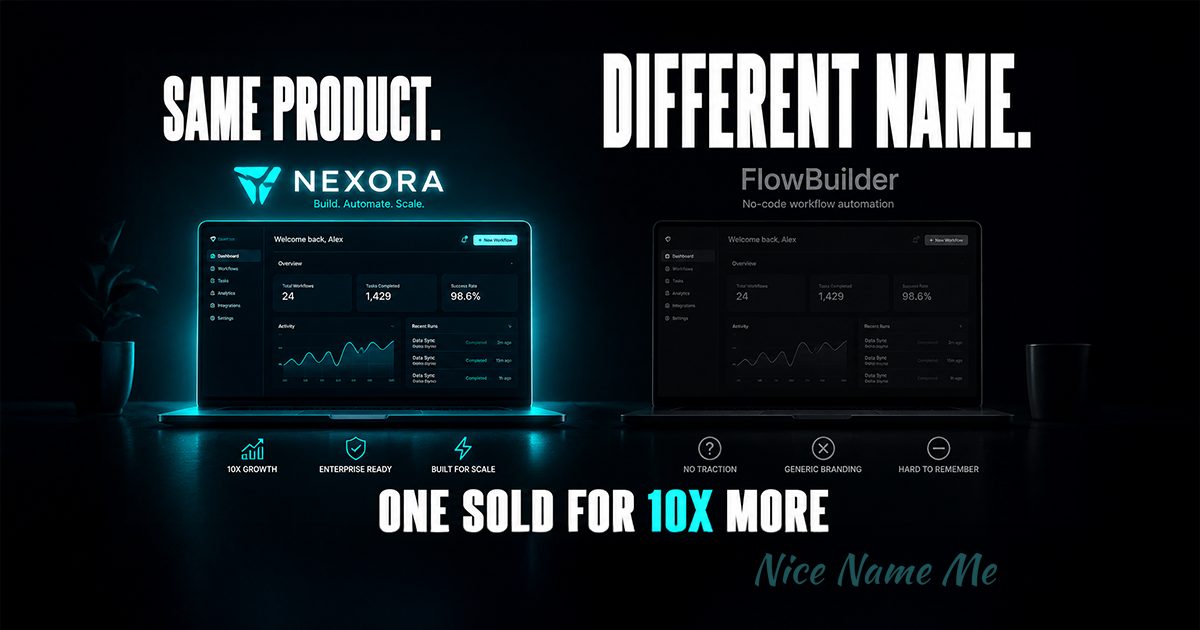
No code startup names face a unique challenge: explaining complex functionality to non-technical users while sounding approachable. Bubble, Webflow, and Zapier solved this by choosing names that suggest ease and flow rather than technical complexity. The no-code market reached over $13 billion in 2024, but most founders still pick names that sound like developer tools rather than business solutions. Your target users are marketers, designers, and entrepreneurs who want power without programming. They need to understand what your product does from the name alone. The best no-code names work like good interfaces — they make the complex feel simple and the technical feel human.
Why No-Code Names Need Different Rules
Traditional software names can afford to be abstract. Developers will dig into documentation regardless of what you call your API or framework. No-code users won't. They're solving immediate business problems and need confidence that your tool fits their workflow.
Consider Airtable versus PostgreSQL. Both are databases, but Airtable's name suggests a clean workspace where everything has its place. PostgreSQL sounds like something that requires a computer science degree. Notion works similarly — the name implies a simple idea or concept, not a complex knowledge management system.
The naming sweet spot for no-code products sits between descriptive clarity and memorable simplicity. Your name should answer "what does this do?" without sounding like a feature list. Think Mailchimp (email marketing), Shopify (e-commerce), or Calendly (scheduling) — each name gives you the category plus a hint of personality.
The Four Naming Approaches That Work
Action-based names work well when your product helps users accomplish specific tasks. Zapier connects apps ("zap" suggests quick automation). Typeform makes form creation feel creative rather than technical. These names focus on the outcome, not the underlying technology.
Simplification names take complex concepts and make them sound accessible. Webflow suggests that web development can be smooth and natural. Bubble implies that app creation should be light and effortless. What's interesting is that both platforms are quite powerful — their names just hide the complexity.
Workspace names position your product as a place where things get done. Airtable, Notion, and Monday.com all suggest organized environments. This approach works especially well for productivity and collaboration tools where users spend significant time in your interface.
Capability names describe what becomes possible, not what the tool does. Shopify enables commerce. Teachable enables education. These names appeal to ambitious users who want to build something bigger than what they currently have.
Common Naming Mistakes to Avoid
Tech-heavy names immediately alienate your core audience. Names like "FlowEngine" or "ProcessBuilder" sound like they require training. Your marketing team will struggle to explain why non-technical users should care about something called "DataSync Pro."
Generic descriptors create instant forgettability. "EasyApp," "SimpleFlow," and "QuickBuild" tell users nothing memorable about your specific solution — plus they face trademark issues since dozens of companies use similar combinations.
Overly clever wordplay often backfires in business contexts. Punny names might get laughs but struggle when a startup founder needs to say your product name in investor meetings and customer presentations with confidence.
SetSync.ai works for a no-code automation tool — setup plus synchronization, no technical jargon required.
Acronyms and abbreviations make your product harder to remember and discuss. "LCAP" (Low-Code Application Platform) might save characters but forces users to remember what the letters mean. Successful no-code companies choose real words that stick in memory.
Testing Your No-Code Product Name
Start with the elevator test: can someone who's never heard of your product understand what it does from the name alone? Ask five non-technical people what they think your product might do. If they're consistently wrong about the category, you need a clearer name.
Test the confidence factor by having potential users practice saying your name in business scenarios. "We're using [your product] to manage our workflow" should feel natural, not awkward. Names that are hard to pronounce or sound too casual may hurt adoption in professional settings.
Check domain availability and trademark conflicts early. Many great no-code names are already taken, but creative approaches can work — Webflow uses the .com, while WebflowApp.com or BuildWithWebflow.com could also function as strong alternatives. Consider whether you need the exact match or if a slight variation maintains your brand intent.
Run a scaling test by imagining your product name in different contexts: mobile app stores, integration marketplaces, case studies, and conference presentations. The best names work equally well on a business card and a billboard.
No-code product names succeed when they bridge the gap between powerful capability and approachable simplicity. Your users want to feel smart, not intimidated. They're building businesses and solving problems, not playing with tech toys. The right name signals that your product amplifies their existing skills rather than requiring new ones. For more naming strategies across different product categories, check out our guides on naming SaaS products and startup naming fundamentals. When you're ready to secure the perfect domain, explore our curated domain marketplace or get a professional domain appraisal. Once a name earns its place, lock in the domain on Dynadot before someone else does.
Find Your Perfect Domain
Free three-tier appraisal — quick sale, realistic market, ideal buyer. No guesswork.
Try Free Appraisal Browse Premium Domains